
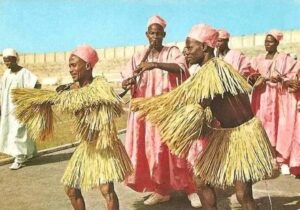
The Kaftani and Hula Kube: Symbols of Prestige and Shared Heritage Between the Hausa and Senegalese Peoples
The kaftani (also known as kaftan) and hula kube are more than traditional garments—they are cultural emblems carrying the legacy of centuries-old civilizations. Deeply embedded in both Hausa and Senegalese traditions, these attires reflect a long history of identity, Islamic influence, and trans-Saharan exchange. Though their appearances may vary between cultures, their symbolic significance remains powerful across West Africa.
The Ancient Roots of the Kaftani
The kaftani is a long, flowing robe, often elaborately embroidered. Its origins trace back to ancient Mesopotamia, where similar garments were worn for both practical and ceremonial reasons. During the periods of the Huns and Göktürks (4th–6th centuries CE), long robes were essential attire in the Eurasian steppes.
Under the Abbasid Caliphate (750–1258 CE), the kaftani became a symbol of aristocracy, particularly in Persia and the Ottoman Empire. Rich silks and dazzling brocades turned it into a regal garment. As Islamic civilization expanded across North Africa, the kaftani followed suit, carried by scholars, traders, and pilgrims.
Arrival in West Africa: Trade, Islam, and Cultural Integration
By the 12th century, trans-Saharan trade had connected the Islamic Maghreb with the Sahelian kingdoms. The Almohad dynasty helped popularize the kaftani among Berbers and West African elites. Hausa city-states like Kano, Katsina, and Zaria quickly integrated the robe into their aristocratic and religious lives.
In Senegal, ethnic groups like the Wolof embraced the kaftan as ceremonial attire as Islam spread further into the region. The Senegalese kaftan, or grand boubou, adopted lighter fabrics and intricate embroidery suitable for the humid coastal climate.
Hausa Ingenuity: From Grass Weaving to Cotton Craftsmanship
Long before Islamic influence, the Hausa had developed a distinctive textile culture. Ethnographic sources and oral histories suggest that the Hausa wove grass to create rudimentary clothing over 3,000 years ago. During interactions with Nile Valley civilizations like the Nubians and Napatans, this craftsmanship advanced.
By the 5th to 9th century CE, coinciding with Mesopotamian textile advancements, the Hausa began weaving cotton. This prepared them to seamlessly incorporate the kaftani into their existing framework of local fashion, enhancing rather than replacing their indigenous heritage.
Reference:
Adamu, M. (1978). The Hausa Factor in West African History. Ahmadu Bello University Press.
Meillassoux, C. (1981). Maidens, Meal and Money: Capitalism and the Domestic Community. Cambridge University Press.
The Kaftani in Hausa and Senegalese Culture
Among the Hausa, the kaftani is an essential part of male formalwear, worn during weddings, religious festivals, and naming ceremonies. Made from luxurious materials such as shadda, silk, or starched cotton, it signifies respectability and piety.
In Senegal, the grand boubou is worn with pride at official and spiritual events. While similar in cut, the Senegalese adaptation favors brighter colors, lighter fabrics, and unique embroidery styles reflecting coastal aesthetics.
Reference:
Robinson, D. (2000). Paths of Accommodation: Muslim Societies and French Colonial Authorities in Senegal and Mauritania, 1880–1920. Ohio University Press.
Hula, Tagiya, Ube: The Crown of Hausa Male Elegance
The hula is a traditional Hausa cap. Round, firm, and richly adorned, it complements the kaftani and represents maturity and cultural pride. Crafted from cotton, silk, or wool, it is worn during religious prayers, weddings, and public events.
Though uniquely Hausa in form, the hula kube has inspired variations among the Fulani, Kanuri, and other West African peoples. These adaptations confirm the cap’s iconic status in the broader Sahelian wardrobe.
In Senegal, similar headwear like the futah or tailored skullcaps serve a similar role—signifying social standing and traditional values.
Reference:
Barkindo, B. M. (1989). The Sultanate of Mandara to 1902: History of the Evolution, Development and Collapse of a Central Sudanese Kingdom. Stuttgart: Franz Steiner Verlag.
Cross-Cultural Exchange and Shared Legacy
The blending of the kaftani and hula kube across Hausa, moroccans and Senegalese societies reveals the deep cultural synthesis fostered by centuries of trade and Islamic transmission. As caravans traveled from the Maghreb to the Gulf of Guinea, they carried more than goods—they transported fashions, ideas, and identities.
This convergence illustrates how African cultures are dynamic, not static—absorbing external influences while maintaining distinct local expression.
Modern Relevance: Pride in Heritage
Today, the kaftani and hula kube remain wardrobe staples during special occasions, religious events, and diasporic festivals. Young designers across Nigeria, Senegal, and the global African diaspora continue to modernize these garments, combining heritage with high fashion.
In an age of globalization, these traditional items serve not only as clothing but as acts of cultural preservation and expression.
Conclusion
The kaftani and hula kube are more than garments—they are woven chronicles of West African history. Among the Hausa, they reflect an ancient textile tradition enriched by Nile Valley and Islamic contacts. Among the Senegalese, they capture the elegance and dignity of Sahelian Islam.
Together, they are testaments to a shared heritage forged through trade, faith, and cultural ingenuity. Their endurance in the modern world affirms the strength and resilience of African identity.
References:
1. Adamu, M. (1978). The Hausa Factor in West African History. Ahmadu Bello University Press.
2. Robinson, D. (2000). Paths of Accommodation. Ohio University Press.
3. Barkindo, B. M. (1989). The Sultanate of Mandara to 1902. Franz Steiner Verlag.
4. Meillassoux, C. (1981). Maidens, Meal and Money. Cambridge University Press.
5. Lydon, G. (2009). On Trans-Saharan Trails: Islamic Law, Trade Networks, and Cross-Cultural Exchange in Nineteenth-Century Western Africa. Cambridge University Press.